Postdoctoral Fellows
2026-2027
YONG-HA KIM (September 2026 – August 2027)
Tang Center Postdoctoral Research Scholar in the Department of East Asian Languages and Cultures
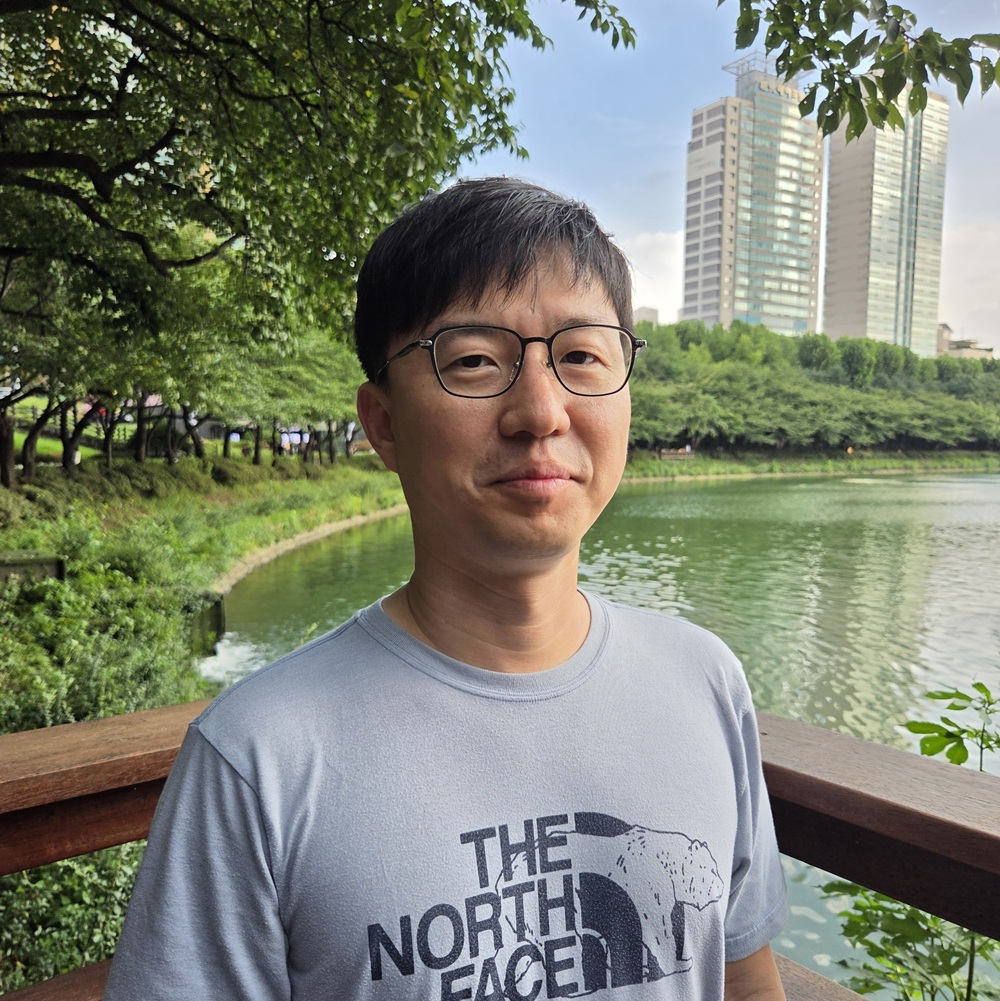
Yong-ha Kim is a Tang Center Postdoctoral Research Scholar in the Department of East Asian Languages and Cultures, specializing in early Chinese history. His research focuses on the tension between early Chinese empire formation and local diversity. Yong-ha’s dissertation, “Rethinking Unification: Ideology, Standardization, and Local Accommodation in the Qin Empire (221–207 BCE),” critiques the concept of “unification” by examining how it can shroud the violence of conquest and obscure the accommodation of local diversity in the process of early Chinese empire-building. He deploys excavated texts, archaeological materials related to local administration and received texts to reconstruct the history of this era. He is also interested in the comparative history of ancient empires and civilizations and is building a database of ancient artifacts held in museums around the world. He is additionally engaged in translating scholarship on ancient civilizations beyond China into Korean.
Email: [email protected]
2021-2022
QINGZHU WANG (September 2021 – August 2022)
Postdoctoral Fellow in the Department of East Asian Languages and Cultures and the Tang Center for Early China
As an archaeologist and archaeometallurgist, Qingzhu Wang studies bronze objects and metallurgical remains to investigate the process and nature of bronze production in early states. Funded by the National Science Foundation (2018), his dissertation research focuses on the role of bronze production, distribution, and consumption in the Shang (ca. 1600-1050 BCE) period of Bronze Age China, examining state organization and political economy from a regional perspective. In his dissertation, he used a multi-proxy research approach, including analyses of bronze objects for their styles, inscriptions, casting methods, chemical compositions, and lead isotope ratios. He also conducted scientific analyses of metallurgical remains related to bronze production. His research revealed significant changes in bronze production and circulation during different periods of the Shang state, providing a new understanding of the operation and development of the Shang state. He has participated in excavations and research projects in China, the Andes, and Africa. His postdoctoral project at Columbia will place bronze consumption in the larger framework of colonialism to investigate how Shang elites in the capitals attempted to integrate Shandong into the state order.
Email: [email protected]