April 3, 2026
The 5th Tang Special Annual lecture in Archaeology
“The Lasting Glory of Chu: The Excavation of the Tomb of King Kaolie”
All visitors without a CUID are required to receive pre-authorization to gain access to Morningside campus as per guidelines of Columbia Morningside campus access. Attendees must present a government-issued ID with their name matching exactly the name registered for the event, along with an one-time QR code (via email), for entry.
Time: Friday, April 3, 2026 (1:00 – 6:00 pm)
403, Kent Hall, Columbia University
Keynote Speakers:
GONG Xicheng, Senior Researcher, Anhui Provincial Institute of Cultural Relics and Archaeology
“The World of the King of Chu: An Overview of the Archaeological Findings at Wuwangdun” (presented by Lu Guoquan)
LU Guoquan, Professor of Archaeology, Shandong University
“Excavating Wuwangdun: Technology, Conservation, and Interdisciplinary Research in Archaeology”
Commentators:
Jenny So, Independent Scholar; Professor of Fine Arts, CUHK (retired)
Constance Cook, Professor Emerita, Chinese, Lehigh University
Lothar von Falkenhausen, Distinguished Professor of Chinese Archaeology and Art History, UCLA
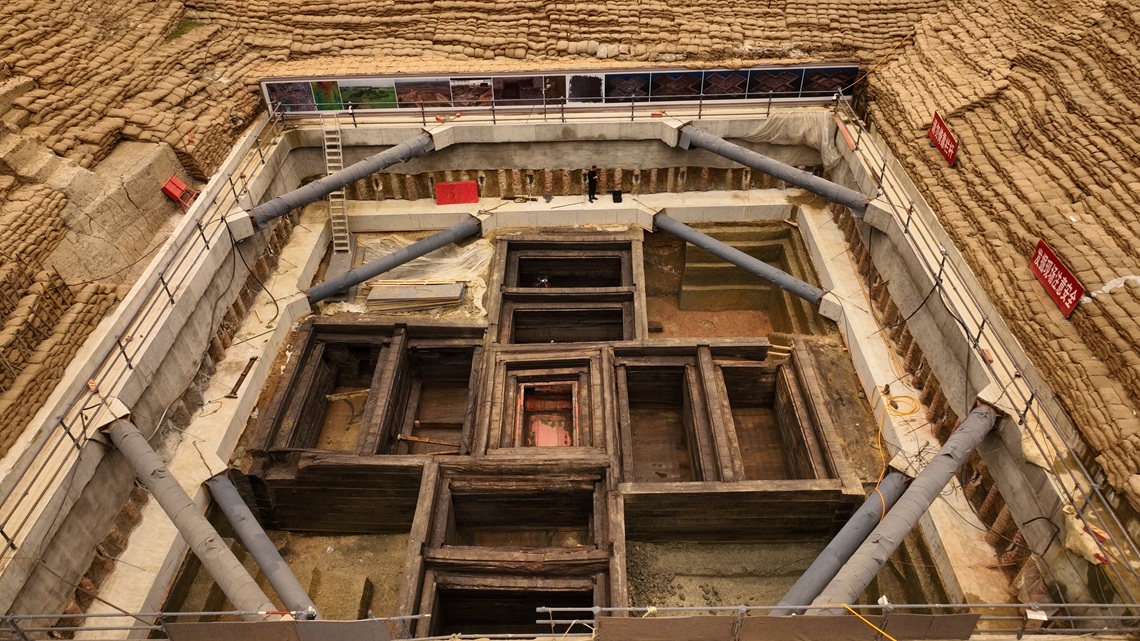
The The excavation of the tomb of King Kaolie of Chu 楚考烈王 at Wuwangdun 武王墩 in 2020-24 represents one of the most important archaeological discoveries in recent years. Although the burial chambers had suffered looting damage from the Tang dynasty through as late as 2015, impressive quantities of artefacts have been recovered from the tomb including 154 bronze vessels, two sets of bells, numerous jade objects, oracle shells, and about 200 bags of plant remains. The wooden
chambers are exceptionally well preserved and bear ink writings on many structural components. This is the only scientifically excavated Chu royal tomb, located in the eastern suburb of the last Chu capital, Shouchun 壽春 in Anhui Province. The entombed King Kaolie (r. 262–238 BCE) is well-known for his conquest of the state of Lu and for his leadership in the alliance of the eastern states to resist Qin in 241 BCE. The discovery raises important questions about the society and culture of the
highly volatile late Warring States period (480–221 BCE).